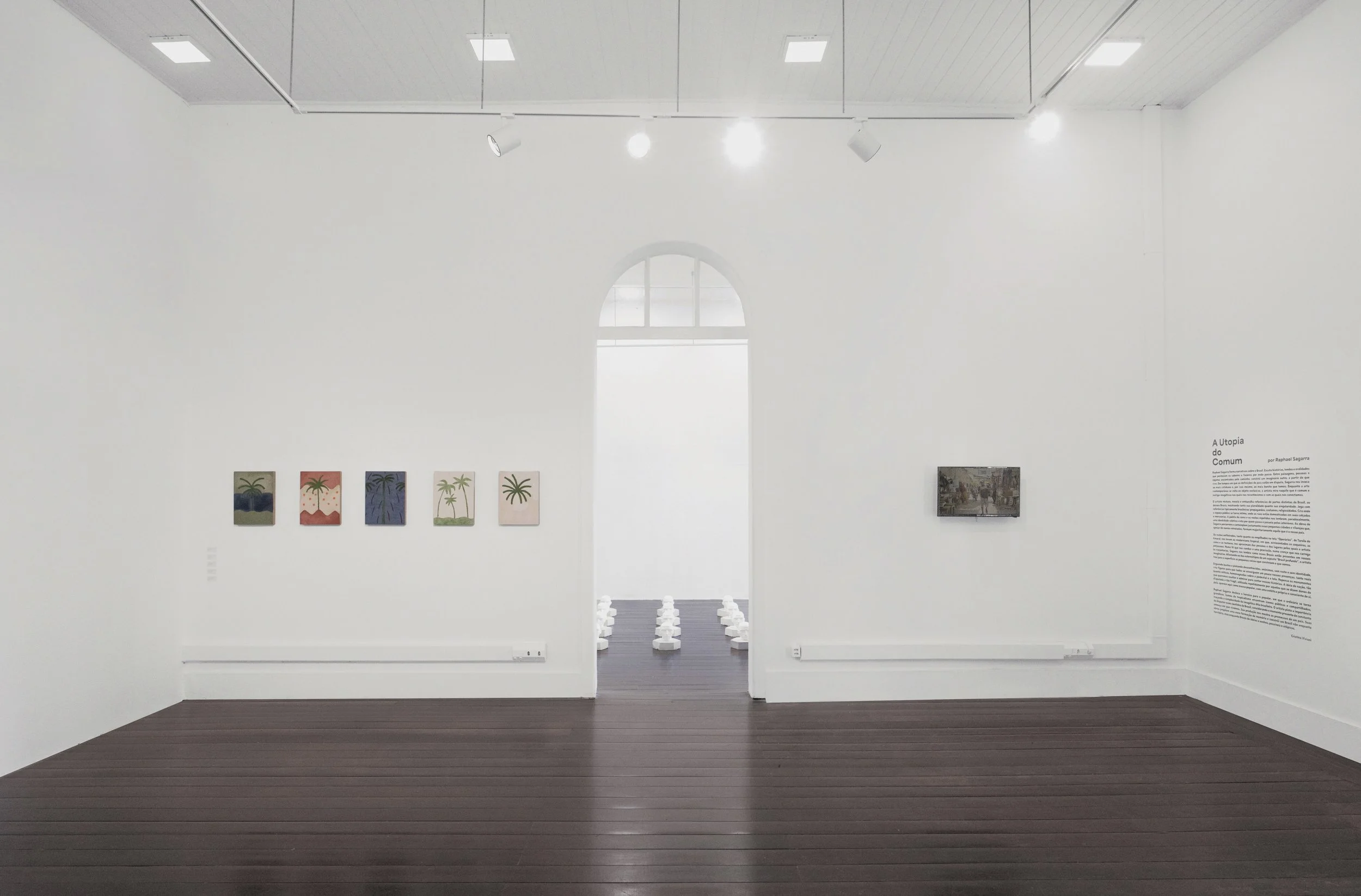
A Utopia do Comum — Galeria Ruy Meira, Fundação Cultural do Pará
Curator: Cristina Viviani
Raphael Sagarra constructs narratives about Brazil. He learns the stories, legends, and oral traditions that permeate the knowledge and practices of the places he passes through. Among landscapes, people, and objects encountered along the way, he builds an alternative imaginary grounded in lived experience. At a time when the definitions of the country are under dispute, Sagarra invokes what is most ordinary and, precisely because of that, what is most beautiful about us. While contemporary art turns toward the exclusive object, the artist focuses on what is common, evoking imagery in which we recognize ourselves and with which we connect.
The artist blends, merges, and interweaves references from distinct parts of Brazil—or from these many Brazils—revealing both their plurality and their singularity. He plays with distinctly Brazilian references: advertisements, customs, and forms of religiosity. He creates spaces where the public becomes intimate, where the streets are domesticated through their sidewalks and corner stores. The color palette and repeated faces paradoxically evoke a collective identity, seen through the eyes of those who travel through and wander the country’s inner regions. Sagarra’s works move through and contemplate precisely these small towns and villages which, though less frequently represented, constitute the greater part of what our country truly is.
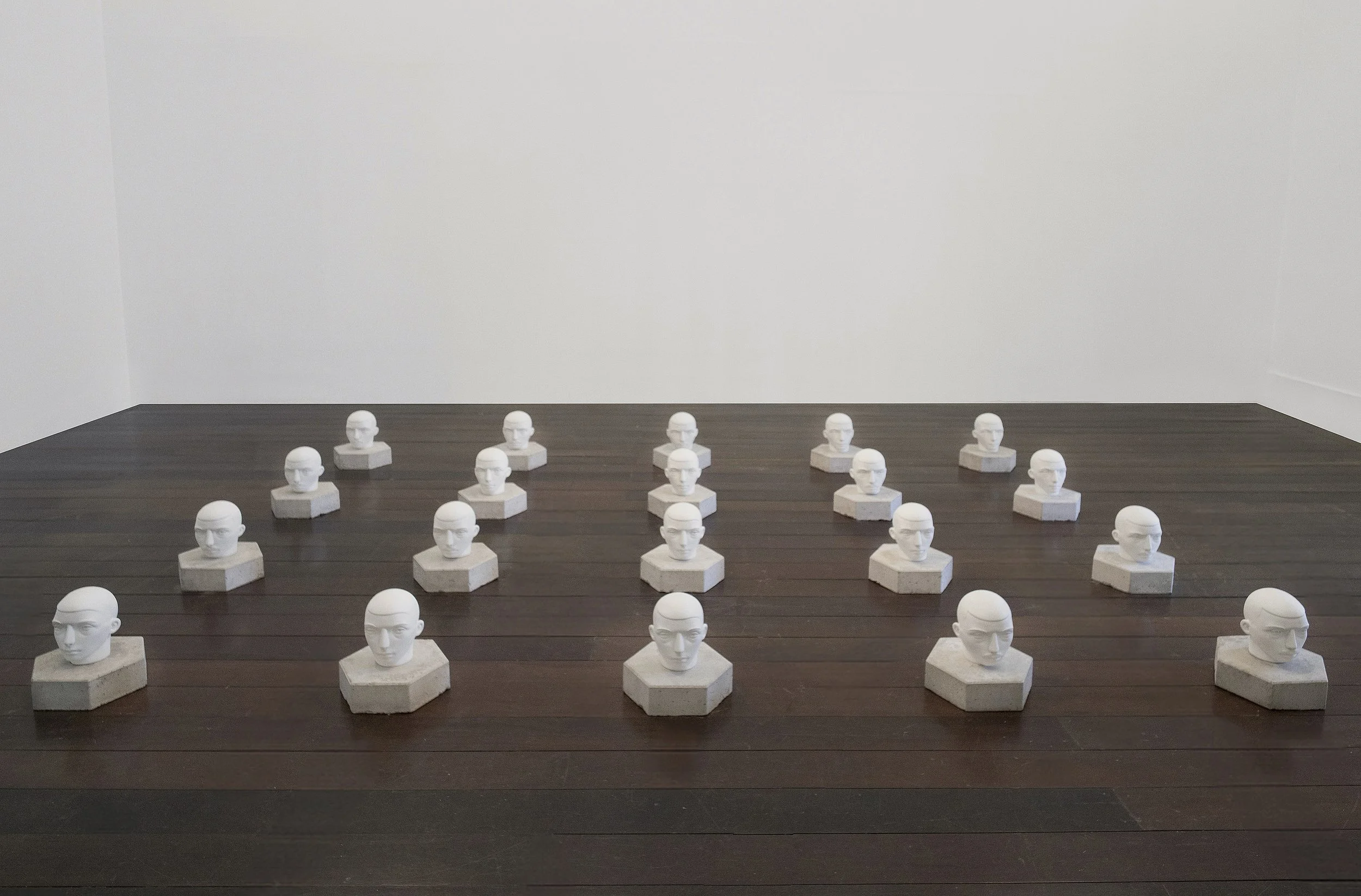
The faces lined up, much like those stacked in the painting Operários by Tarsila do Amaral, lead us toward a tropical modernism in which palm trees, colors, and textures bring us closer to the people and places the artist has passed through. Through a faith that guides us into a procession, through a belief that carries us toward enchanted realms, Sagarra reminds us how these many Brazils inhabit our collective imagination. Moving away from the stereotypes of a supposed “deep Brazil,” the artist brings to the surface the small things that shape who we are.
By erecting busts and painting strangers—anonymous, faceless, and without identity—he creates figures in which everyone may recognize something of themselves within these presences, both real and mythical, honored upon pedestals and canvases. He rethinks the monuments we choose to exalt and admire in order to tell our stories. The idea of nationhood—so contested and so fragile, repeatedly appropriated by those who claim ownership over the country—appears here as a popular mass, possessing its own aesthetic and self-awareness.
Raphael Sagarra shifts the heroic toward the popular, where the ordinary becomes monumental. Icons of Tropicalism encounter public and shared icons, tracing the complexity of what is called Brazilian imagery. The artist portrays the importance of disputing and redefining these meanings of Brazil, especially in the present moment of constant threat in which we live. His body of work reveals the promises of a country. His works propose a new formation of memory and construct a Brazil not as a territory, but as multiple Brazils made of ideas and dreams—possible and utopian.
By Cristina Viviani